
Best Countryside Areas in England
A practical, region-by-region guide to choosing the right countryside area in England based on budget, commute, pace, schools and the kind of life you actually want.
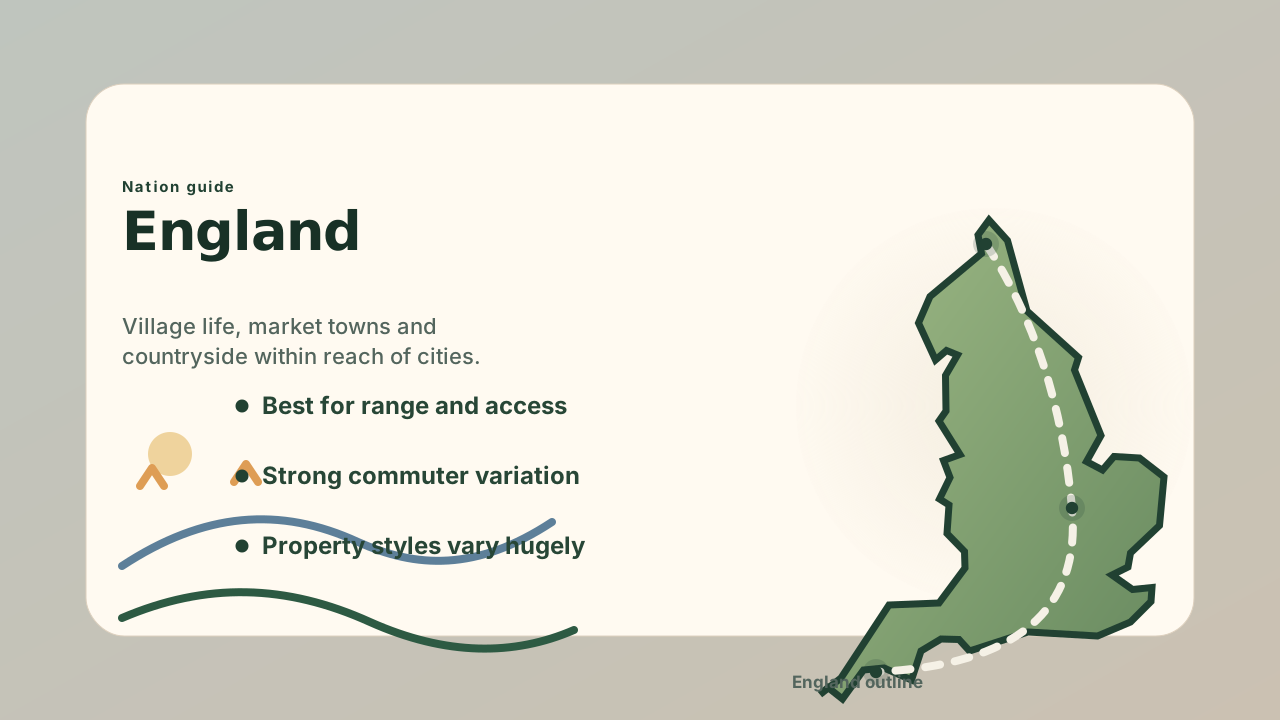
This is not a ranked list of best places in the abstract. The aim is to help you narrow the country into realistic move types. Areas are judged on everyday practicality, value for space, access to work and services, housing stock, landscape feel and whether the place still works outside the prettiest season.
That is good news, because there is almost every type of rural life here: commuter villages, market towns, proper farming country, wild-feeling uplands, coastal belts and places where you can still get into a major city without the whole week revolving around a train timetable. It is also the reason people get overwhelmed. The right answer is rarely “the prettiest place”. It is the place that fits your actual week.
How to narrow England properly
England is too varied to search as one big dream. The useful way to approach it is to choose your lane first. Are you trying to stay within reach of London? Do you want a market town with ordinary daily life still intact? Are schools the main filter? Are you chasing bigger landscapes and a slower pace, even if that means weaker transport? Until you answer that, every shortlist will feel arbitrary.
A good first pass is to score each area against five questions: how much space your budget buys, how painful the commute would be, whether daily errands are still easy, whether the housing stock suits your appetite for maintenance, and whether the place still feels right in winter rather than only on a sunny viewing day.
England at a glance: which version are you actually choosing?
| Move shape | Usually strongest in | Best when | Main caution |
|---|---|---|---|
| Commutable countryside | Chilterns, Oxfordshire belts, parts of Hampshire and Sussex | You still need city access to feel realistic midweek | You can pay a lot for a village name and a station badge without buying much more calm |
| Balanced market-town life | Shropshire, North Yorkshire, selected Somerset and Devon belts | You want ordinary daily life to keep functioning | Pretty market towns can become expensive if they are already on every lifestyle list |
| Bigger landscapes and more space | Cumbria fringes, parts of Northumberland and upland belts | You genuinely want distance and weather in the deal | These moves punish people who still expect urban convenience by reflex |
| Value-first countryside | Lincolnshire, East Yorkshire, parts of the Midlands | You care more about usefulness than prestige | Some readers talk themselves out of good options because the county lacks glamour |
The main types of English countryside move
| Move type | What it gives you | What catches people out |
|---|---|---|
| Near-London countryside | Fast trains, polished villages, strong schools, easier hybrid commuting. | High prices, competition, and villages that can feel more like expensive suburbs than a real reset. |
| Market-town counties | The best balance for many households: rural surroundings plus shops, schools and some resilience. | You still need to check station access and whether the town is thriving or fading. |
| Proper rural counties | More space, lower visual noise, stronger countryside identity. | Car dependence, thinner services, colder housing stock and more maintenance. |
| Coastal-rural belts | Huge lifestyle value, especially if sea access matters. | Seasonality, holiday-let pressure and places that are lovely to visit but harder to run ordinary life from. |
Regions worth shortlisting first
1. The Chilterns, Oxfordshire fringe and Buckinghamshire villages
This is classic “I need London to remain possible” countryside. You get attractive villages, good rail access in the better-connected pockets, and a feeling of being out of the city without being truly detached from it. It suits higher earners, hybrid workers and families who still want access to strong schools and regular city travel. The catch is obvious: value is often weak and the prettiest villages command serious premiums.
2. Hampshire, West Sussex and the wider South Downs belt
Useful if you want a softer version of the south-of-England dream: countryside, coast within reach in parts, and a calmer everyday rhythm without going fully remote. The better areas are practical as well as attractive. The weaker ones look good in the brochure but involve more driving than people expect.
3. Herefordshire, Shropshire and the Welsh-border counties
Often overlooked, and that is part of their appeal. You get real countryside, proper market towns, more house for the money in many areas, and a slower pace that feels less performative than some southern hotspots. These counties suit readers who genuinely want to live differently rather than simply relocate their old city life into a prettier setting.
4. North Yorkshire and the York-to-Dales orbit
A strong all-rounder zone. There are sophisticated market towns, attractive villages, excellent walking country and some genuinely good bases for families. It can work for people who want scenery and substance together. The trade-off is that the best-known places are not cheap, and winter practicality matters more than summer romance.
5. Cumbria and the fringes beyond the Lake District premium
Good for readers who want more landscape, more weather and a stronger sense of leaving urban life behind. Parts of Cumbria can be magical; parts can also be logistically hard if you need regular city access or dependable everyday convenience. The key is distinguishing between lifestyle fantasy and a place that will actually support your routine.
6. Devon, Dorset and Somerset away from the obvious honeypots
This band works well for people chasing a slower pace, outdoor life and a softer climate feel. The best move is usually not the postcard village everyone already knows, but the practical market-town orbit nearby. That is where you often keep the beauty without paying the full fantasy premium.
7. Lincolnshire, Nottinghamshire and parts of East Yorkshire
These are not always the fashionable answers, but they can be sensible ones. If value, space and a quieter pace matter more than brand-name countryside, you can find places that function well and cost less. These regions reward people who are willing to choose usefulness over prestige.
The mistakes people make in England
- They buy the village, not the life. A beautiful high street and a pub do not tell you whether school runs, shopping, trades and station access are realistic.
- They overpay for commuter credibility. If you will only go to London once or twice a month, paying a huge premium to stay on the fastest rail line may be unnecessary.
- They underrate county personality. Some places feel polished and affluent, others practical and understated, others properly rural. That matters more than glossy photos suggest.
- They compare asking prices without comparing housing stock. A cheap detached house in a colder, older area is not the same proposition as a smaller but easier home in a more connected one.
Who England tends to suit best — and who it does not
England is strongest for readers who want options, gradients and a move that can be tuned rather than made in one dramatic leap. It suits hybrid commuters, families who still need everyday services nearby, and buyers who want countryside without turning every basic errand into a project. It is often the easiest nation for building a shortlist that still looks sensible after the romantic mood fades.
People who want proper choice between commuter belts, market towns and more rural edges, and who value practical week-to-week life as much as scenery.
Readers who say they want total escape but still need every convenience to feel immediate. England can do balance brilliantly; it is less convincing if you want wildness without friction.
Choose the market-town orbit one rung outside the most obvious village prestige zone. That is often where you keep the feel and lose some of the premium.
England is where many people accidentally buy a story about a county instead of a life that actually fits their Tuesday.
How to use this shortlist next
For a London-focused shortlist, go next to Best Countryside Areas Near London. To pressure-test the money side of the move, read Is Living in the Countryside Cheaper in the UK?. For house-hunting reality, follow with Questions to Ask When Viewing a Rural Property.
If your shortlist is getting muddled, stop and read Village vs Market Town and How Remote Is Too Remote?. They usually make the area search cleaner.