
Best Countryside Areas in Scotland
A practical guide to countryside living in Scotland, including commuter-friendly belts, market-town areas, and deeper rural regions that genuinely change your pace of life.
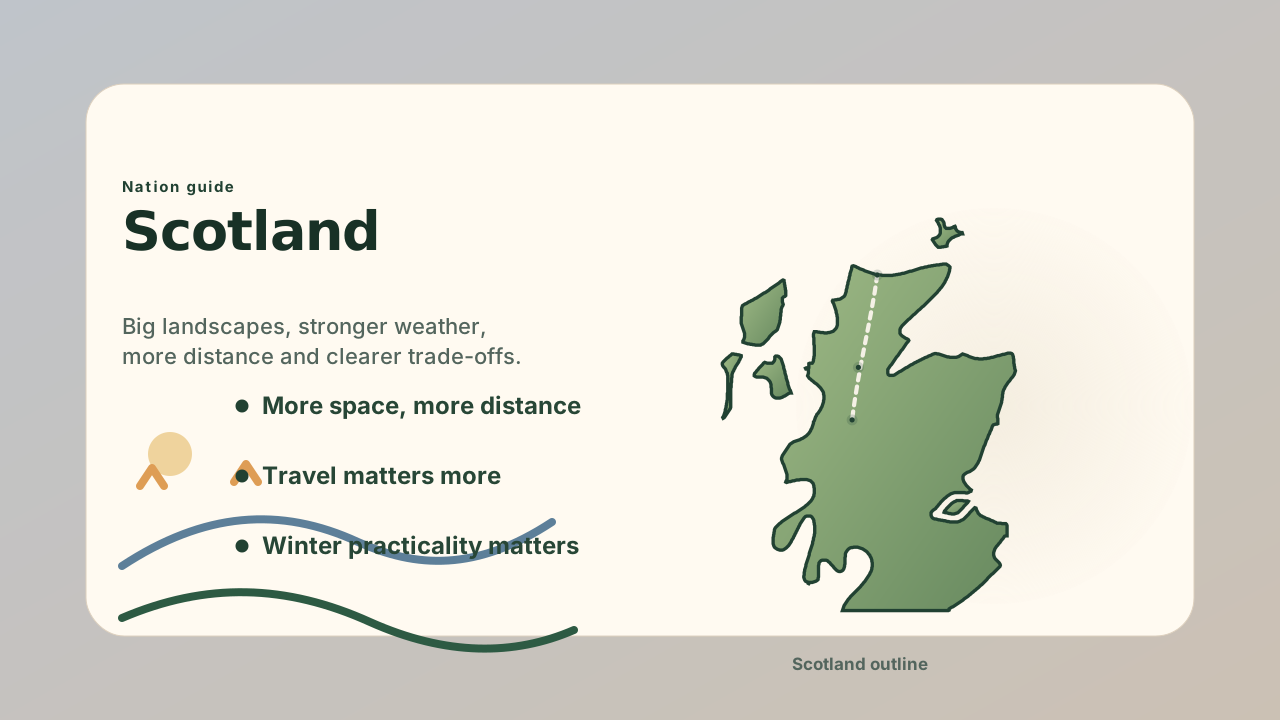
This is not a ranked list of best places in the abstract. The aim is to help you narrow the country into realistic move types. Areas are judged on everyday practicality, value for space, access to work and services, housing stock, landscape feel and whether the place still works outside the prettiest season.
The scenery is bigger, the identity is stronger and the sense of “starting again properly” is often more powerful than in much of England. That does not make every Scottish rural move a good one. Distances, weather, housing stock and service access matter here in a very practical way.
How to narrow Scotland
The useful question in Scotland is not “where is nice?” Almost everywhere is nice in some way. The better question is whether you need regular access to Edinburgh, Glasgow, Aberdeen or Inverness, or whether you are genuinely ready for a slower, thinner, less convenience-led version of life. Scotland offers both, but they are very different moves.
If you want a gentle countryside transition, look at the zones around established towns and cities. If you want stronger landscape value and less compromise with urban life, you can go further into Perthshire, the Borders, Highland fringes and some western or northern areas. But the further you go, the more the everyday practicals matter.
Scotland at a glance: what trade-off are you buying?
| Move shape | Usually strongest in | Best when | Main caution |
|---|---|---|---|
| Practical but still beautiful | Perthshire, Borders, parts of Fife | You want scenery without giving up the bones of ordinary life | Good practical zones disappear quickly because experienced movers shortlist them first |
| Half-step out of the cities | Stirlingshire edge zones, some Fife and nearby belt areas | You still need Edinburgh or Glasgow within reach | The best-looking edge villages are not always the easiest daily bases |
| Bigger landscapes and distance | Highland fringe towns and more northerly belts | You actually want weather, distance and a cleaner break from urban life | People often underestimate how much the practical week thins out once the landscape gets dramatic |
| Value with room to breathe | Dumfries and Galloway, selected under-hyped belts | You care more about space and calm than buzz | Quiet value only works if the pace does not leave you feeling cut off |
Areas worth comparing first
1. Perthshire
Perthshire is one of the strongest all-round countryside answers in the UK. In the better-connected parts, it gives you scenery, market towns, villages with real character, and enough daily infrastructure that life still works. It suits people who want Scotland at full volume but not total remoteness.
2. The Scottish Borders
The Borders often suit readers who want quieter living, room to breathe and a more grounded pace, while keeping Edinburgh or northern England at least occasionally accessible. The best bits feel settled rather than showy. The trade-off is that you need to be honest about how often you will really travel.
3. Fife and the East Neuk orbit
Useful for buyers who like coast, villages and a less dramatic but often more manageable version of the Scottish countryside move. Parts of Fife are strong for balancing scenery with everyday life. The weakest fit is for people chasing a deep-rural fantasy; the area is usually better when approached as practical lifestyle territory.
4. Stirlingshire and the edge zones between Edinburgh and Glasgow
Good for households that need central-belt access but want more space and a greener day-to-day feel. These areas are often compromise territory in the best sense: less romance than the Highlands, but much more realistic if work, school or family still tie you to the main cities.
5. Highland fringe towns and villages
This is where Scotland becomes a bigger, bolder move. The lifestyle gain can be enormous for the right person, especially if outdoor life is central to why you are moving. But these areas punish vague planning. If you underestimate winter, maintenance, travel time or service access, the dream can become effortful quickly.
6. Dumfries and Galloway
Often underrated. You can find real peace, more space and, in some places, better value than the more famous parts of Scotland. It suits readers who are less concerned with prestige and more concerned with getting a lot of life for their money.
How to choose well in Scotland
- Do the winter test. A place that feels glorious in May may feel exposed or inconvenient in January.
- Check the property fabric carefully. Scotland has a lot of beautiful older homes, and some of them are expensive to heat and maintain.
- Think in travel patterns, not map distances. A route that looks manageable on a map may still feel heavy if you are doing it every week.
- Be honest about remoteness. Loving the idea of “proper Scotland” is not the same as wanting your day-to-day life to be built around it.
Who Scotland tends to suit best — and who it does not
Scotland works best for readers who genuinely want a stronger break in pace, weather and landscape character. It suits people who can live with more seasonality, more distance and a slightly heavier practical week in exchange for bigger scenery and clearer breathing room. It is particularly strong for readers who want the move to feel like a real shift rather than a prettier version of the same life.
Readers who want more space, a clearer sense of place and a move that feels emotionally different from staying on the English commuter treadmill.
People who like the idea of dramatic landscapes but still need spontaneous access to everything. Scotland can feel glorious or wearing depending on how honest you are about convenience.
Start with Perthshire, the Borders or Fife before dreaming yourself into the Highlands. Those places often show whether the Scottish move suits you at all.
In Scotland the most beautiful answer is not always the wisest one, and the distance between those two truths can be expensive.
How to use this shortlist next
For a city-access version of the move, read Best Countryside Areas Near Edinburgh. To understand house-hunting risks, go to Buying an Old Cottage: What It Really Costs. For the wider UK comparison, see Best Countryside Areas in England and Best Countryside Areas in Wales.
If you are not sure whether you want a market town base or a more remote move, use Village vs Market Town before adding more places to the shortlist.