
Hidden Costs of Countryside Living in the UK
A practical guide to the hidden costs of countryside living in the UK, including heating, transport, maintenance, broadband workarounds, insurance, deliveries and all the small frictions that add up.
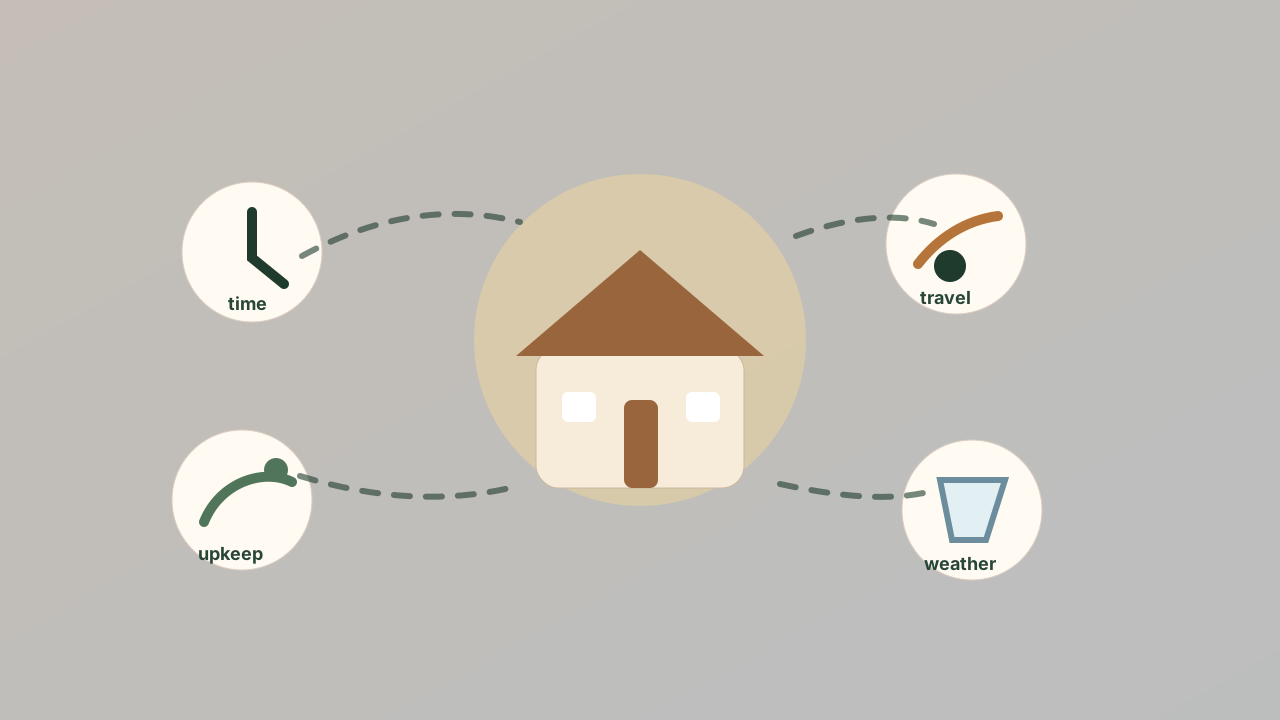
This guide is for people trying to pressure-test the numbers before they fall in love with a property. Use it to compare a real urban life with a real rural life rather than with a fantasy version of one.
More often it becomes expensive in layers: a little more on heating, a little more on fuel, more maintenance than expected, a second car, pricier insurance, occasional delivery compromises, and the simple fact that rural life creates more occasions when you pay for convenience because convenience is no longer built in.
Why the hidden costs matter
Most people moving out of cities already know to compare mortgage or rent. Some also compare council tax. Fewer build a realistic picture of what owning and operating life in the countryside costs week after week. That is where the surprises live.
The countryside can still be very good value. But only if you understand that the savings and the costs often sit in different places.
The main hidden costs
1. Heating that behaves differently
Rural homes are more likely to be older, larger or off-grid. Oil, LPG, direct electric heating or mixed systems can create cash-flow patterns city movers are not used to. Big top-ups feel very different from neat monthly direct debits.
2. More miles than you think
Not just commuting miles. School miles, supermarket miles, station miles, social miles, dog-walk driving miles, “forgot one thing” miles. Those add up into fuel, servicing, tyres and depreciation.
3. Maintenance by accumulation
A larger plot, more gutters, more hedges, more fence, more roofline, more exposure. None of it looks frightening alone. Together it creates a very different ownership profile from a flat or compact suburban house.
4. Specialist fixes
Private drainage, oil tanks, old stonework, outbuildings, drives, gates and wet-weather access can all become budget items. Rural homes often ask for more varied maintenance, not just more of it.
5. Broadband workarounds
If connectivity is weak, households sometimes pay for backup mobile broadband, signal boosters or more expensive packages simply to make remote work reliable. That is not ruinous, but it is the sort of cost people never include in the fantasy version of the move.
6. Insurance and flood complexity
Flood exposure, rebuild complexity, trees, outbuildings or a more isolated setting can all affect quotes and excesses.
7. Paying to save time
Many rural households spend in small ways to reduce friction: more online deliveries, more paid childcare cover, more convenience food on heavy travel days, or paying someone to do maintenance jobs they would not have needed before.
How to avoid expensive surprises
- Buy the right size house, not the most house.
- Check heating, EPC and insulation before you fall for character.
- Model your real car use, not your ideal one.
- Keep a first-year contingency fund.
- Test the location in ordinary conditions. Go back on a weekday. Try the station. Check how far the supermarket really feels.
The hidden-cost test that helps most
A useful exercise is to separate costs into three categories: predictable monthly costs, irregular but inevitable costs, and friction costs. Predictable costs are things like mortgage, council tax and insurance. Irregular but inevitable costs are things like oil top-ups, tyre replacement, hedge cutting or drainage servicing. Friction costs are the small spends that happen because life is less convenient: extra fuel, online delivery fees, childcare cover, buying in bulk because popping out is no longer easy.
Most bad countryside budgets fail on the last two categories. People prepare for the obvious bills and forget the pattern of living. Once you start thinking that way, the move becomes much easier to cost properly.
Where to go next
Follow with Is Living in the Countryside Cheaper in the UK?, Rural Home Insurance Guide and Commuting from the Countryside: What to Calculate First.