
How to Budget for Moving to the Countryside
A practical budgeting guide for the move itself, the house setup stage and the first year of rural life.
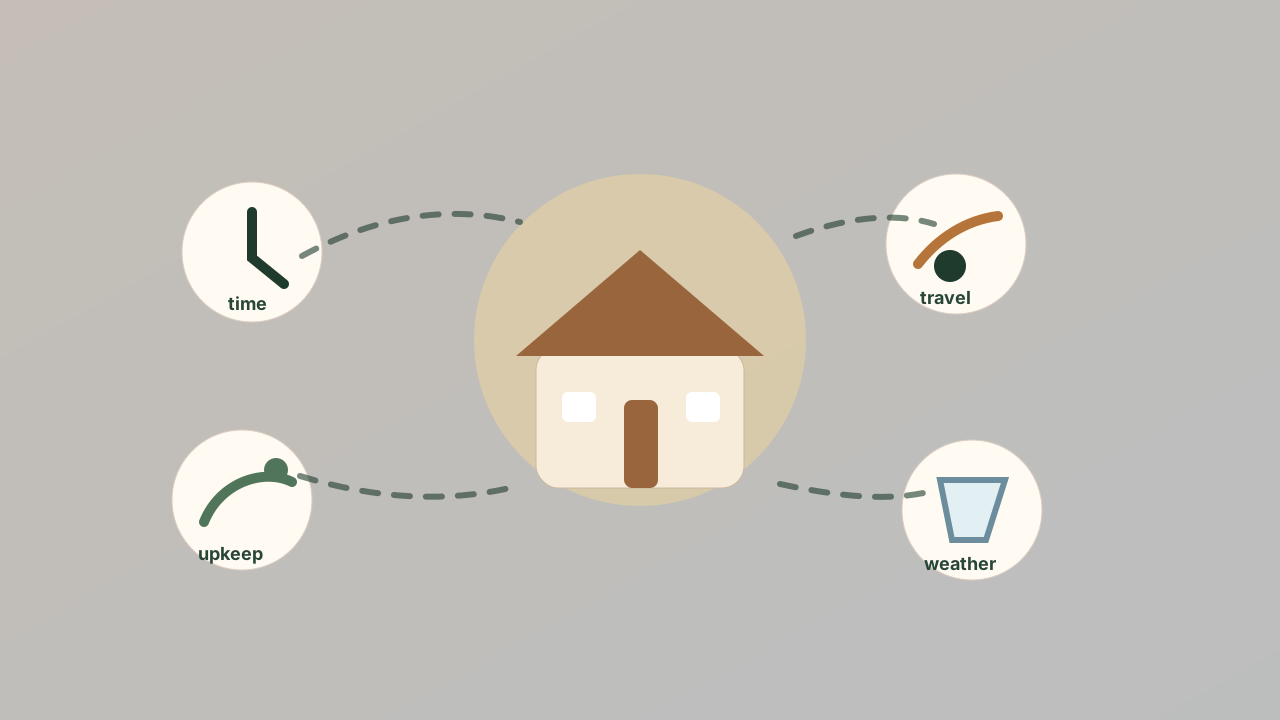
Move week: removals, overlap, travel and all the visible logistics.
First 90 days: setup costs, heating readiness, tools, storage and the boring essentials.
Ordinary life: the monthly and annual drift that decides whether the move feels comfortable.
Use the First-Year Rural Cost Planner if you want the full first-year picture in one place.
This guide works best when the problem is no longer “can we technically move?” but “will we still like the financial shape of this move six months in?” That is a different and much better budgeting question.
Build the budget in three layers
The countryside move budget works better when it is split into three separate buckets. First is the move itself: removals, storage, travel, cleaners, overlap costs and all the obvious transaction spillover. Second is the setup phase: heating, internet, equipment, locks, storage, mats, tools and the quietly annoying first-month essentials. Third is the running pattern of the life itself: transport, heating, maintenance and the seasonal drift that changes whether the move feels easy or tight.
A practical budget structure
| Budget line | What to include | How to think about it |
|---|---|---|
| Move week | Removals, storage, fuel, food, cleaners, overlap nights | Almost always costs more than the tidy quote alone. |
| Setup | Heating prep, broadband, locks, mats, tools, basic storage | These costs make the house function, so they are rarely optional. |
| Monthly drift | Fuel, heating, upkeep and small rural-life extras | This is what decides whether the move feels sustainable. |
| Annual buffer | Insurance jumps, repairs, seasonal work, equipment | Do not pretend these vanish because they are not monthly. |
Quick budget calculator
Use the quick path if you want a proper first-year view rather than a move-week view.
Where to spend and where to hold back
The things that remove genuine friction: broadband that works, sensible removals help, decent matting and storage, a proper first-week toolkit, heating readiness and the checks that stop expensive surprises.
Premature lifestyle spending, decorative purchases, optimistic upgrades and anything you are buying because the move feels exciting rather than because it improves daily life.
What people under-budget most often
- Heating and the first seasonal bill. Especially in bigger or off-grid properties.
- Transport shift. More fuel, more driving and more wear than the city routine.
- Small setup costs. Locks, mats, shelving, tools, hoses, storage, internet kit and all the tiny essentials.
- Repair buffer. Countryside homes often surface work in the first year.
Use this with Is Living in the Countryside Cheaper in the UK? and Hidden Costs of Countryside Living in the UK. Those pages help you estimate the pattern of spending once the novelty wears off.
Useful next moves
After this, use the First-Year Rural Cost Planner, then go to Best Removals and Storage Options When Leaving the City if move-week logistics are the next problem to solve.
Decide whether the problem is the one-off moving cost, the setup phase or the monthly pattern. The wrong bucket often gets blamed for the discomfort.