
City vs Countryside Living in the UK
An honest comparison of city vs countryside living in the UK, covering money, time, family life, work, social rhythm, property, transport and the kinds of people each lifestyle actually suits.
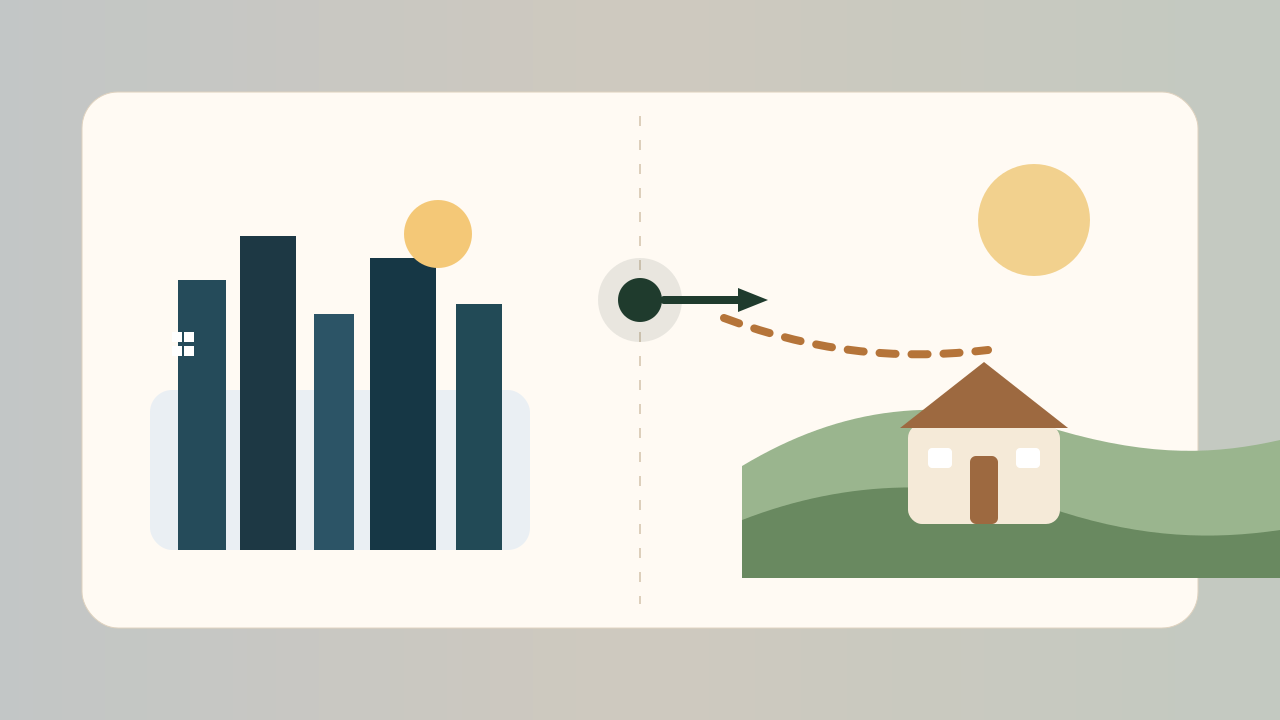
This guide is for people trying to pressure-test the numbers before they fall in love with a property. Use it to compare a real urban life with a real rural life rather than with a fantasy version of one.
City life is not shallow and countryside life is not automatically wholesome. They are different systems for organising your time, money, attention and relationships. The right choice depends on what you value most — and what you are genuinely willing to give up.
What this comparison is really about
People often compare city and countryside at the level of mood: more exciting versus more peaceful, busier versus calmer, expensive versus spacious. Those labels are not useless, but they are too vague to make a life decision from. A better comparison looks at what each environment does to your week.
Where does your time go? How much planning is required? How easy is it to see friends? What does a home cost to buy and run? How much do you walk, drive, carry, queue, organise and maintain? Those are the questions that reveal whether you are built for one system or the other.
The real trade-offs
| Area of life | City | Countryside |
|---|---|---|
| Housing | Usually less space, often higher price per square foot, easier access to flats and newer stock. | Often more space and better headline value, but bigger exposure to maintenance, heating and access issues. |
| Transport | More options, less car dependency, more spontaneity. | More driving, more planning, occasional need for a second car. |
| Convenience | Fast errands, choice, proximity, fewer logistics. | Slower rhythm, more batching of tasks, less top-up convenience. |
| Social life | Easy access to people, events and variety. | Often deeper local routines, but less spontaneity and more travel. |
| Children and dogs | Needs more intentional space-seeking. | Often far easier day to day, but only if practicals like fencing, schools and access work. |
| Mental load | More sensory noise, but less operational admin. | Less sensory noise, but more operational thinking. |
Who city life tends to suit best
City life suits people who value access. If you like options, events, easy travel, compact living, variety in food and culture, and the ability to do things without turning them into projects, cities are very good at that. They also suit younger households, single people, social extroverts and workers who need face time or a broad labour market close by.
The weakness of city life is that it often compresses home. Space becomes expensive. Quiet becomes scarce. Everyday stress can rise gradually without any single dramatic reason.
Who countryside life tends to suit best
Countryside living suits people who are ready to trade some access for some ease. More room, a calmer pace, better walking, cleaner-feeling daily life and a stronger relationship with home can all be meaningful gains. It often suits families, dog owners, remote workers, people leaving a stressful city phase, and anyone who wants weekends to feel less extractive.
The weakness is that the countryside asks more of you administratively. Cars, planning, maintenance, heating and travel become more central. If you thrive on spontaneity, that can feel constraining.
Where people misjudge it
- They compare their current frustrations with the countryside’s imagined strengths. That is not a fair test.
- They assume countryside life is cheaper full stop. Sometimes it is. Often it is simply expensive in different places.
- They assume city life is only for the young. Plenty of people are happier long-term in cities because the access and simplicity suit their temperament.
- They assume countryside life automatically means community. Sometimes it does. Sometimes it means distance, driving and having to build a new routine from scratch.
Where to go next
Continue with Is Living in the Countryside Cheaper in the UK?, Hidden Costs of Countryside Living in the UK and Moving to the Countryside Checklist.